The Internet Is Just Wet Cables, and Someone Might Cut Them
We call it the "Cloud," but our digital world actually lives in 1.3 million kilometers of glass and copper at the bottom of the sea. From "accidental" anchor drags in the Baltic to the 2026 AWS data center strikes, the internet’s physical layer has become a geopolitical hostage.
There is a word that has been doing a lot of emotional heavy lifting for about two decades now: cloud.

Cloud. It is soft. It is fluffy. It is somewhere up there, above your problems, above geopolitics, above everything, kind of like a data centre run by angels. The marketing teams at Google, Amazon, and Microsoft owe their entire brand aesthetics to this one word. "Your files are safe in the cloud." "Back everything up to the cloud." and so on.
Fun fact: My son's name is Bulut, which means cloud in Turkish. And my own name, Ufuk, means horizon. Whic means, I gave my son best possible name 😄 Our names both belongs to sky, phonetically similar and he is really as cute as a shiny white cloud! (At least for now)

While the term "cloud" sounds like your data is floating in the sky, it is actually a physical reality. Unless you are using a satellite internet provider, your data isn't even traveling through space, it’s moving through cables under the ground and the ocean.
Submarine Cables
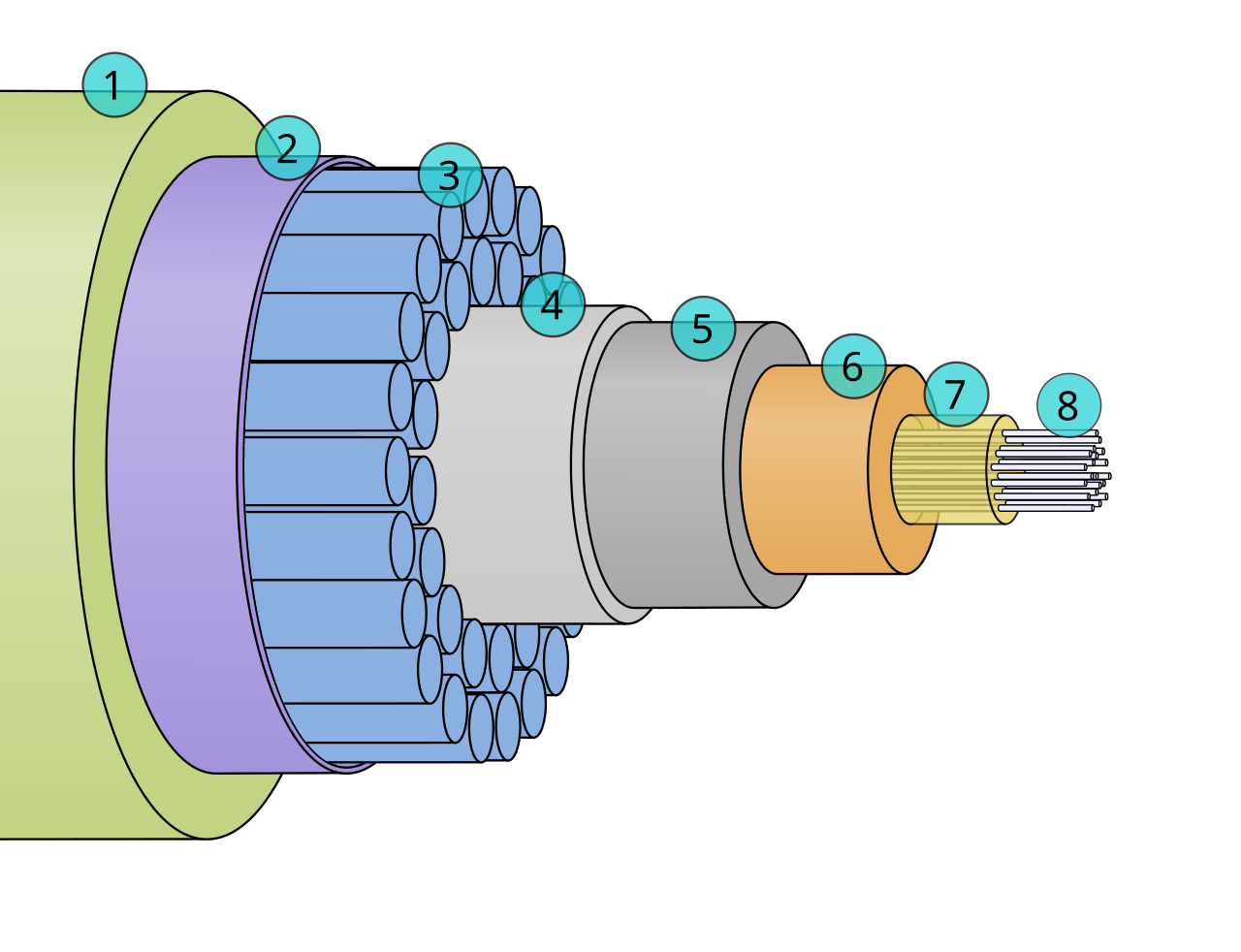
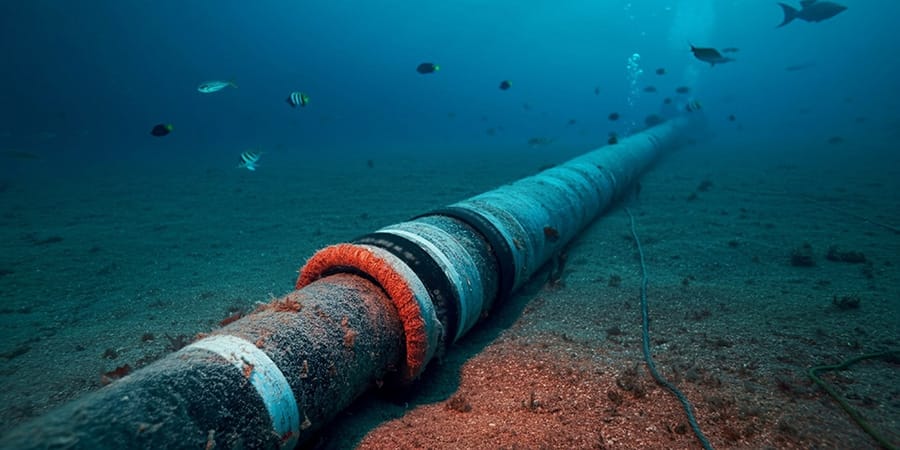
You probably see terrestrial cables and that infrastructure once in your life. They are like sewage system! They are connecting every apartment, every building to network. We also have those cables lying under all the oceans and seas.
And here, you have some eye catching numbers and facts about submarine internet cables:
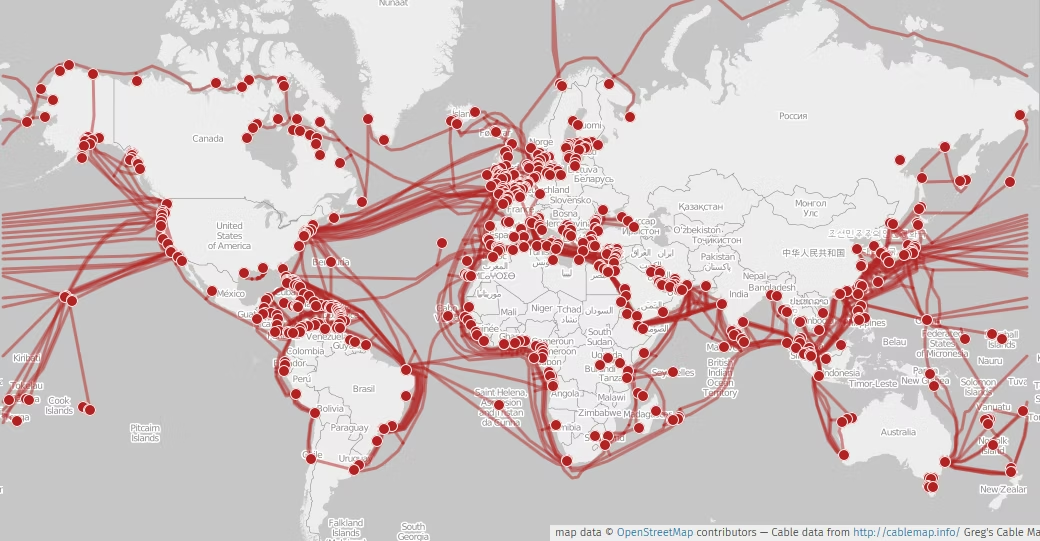
- Subsea cables, carrying electricity or data, nowadays criss-cross Earth’s seas and oceans for a total length exceeding 1.3 million km - more than 32 times Earth’s circumference at the equator.
- There are now over 400 active cables worldwide. They carry as much as 99% of inter-continental internet traffic and bring offshore renewable energy to shore.
- Installing a submarine power cable costs on average between €1-2 million per km, while the costs for subsea telecommunication cables range from around €25,000 to €45,000 per km.
- These cables facilitate over $12 trillion in financial transactions every single day.
Let's go back to your apartment. You probably have a cable connecting your apartment wall internet cable (either copper or fiber) to central router point. So, here is some speculations:
- If your spoiled little brother unplug that cable, your internet is gone!
- If electricity is down, your internet is gone! Actually it is because modem is off.
If you just check what is your modem input voltage and find a battery to supply that voltage, you might thank me later if something catastropic happen. Because If that modem has electricity, those internet cables coming to you wall are pretty robust and likely to survive in an earthquake.
- If someone just cut fiber cable coming to your building, your internet is gone! They are probably redundant and rigid enough for normal attacks, but we are living in intense world.
But for all cases, If your home internet is gone, you probably have mobile internet. Which means connecting to base station wirelessly, and continue journey within cables. So, If someone has a problem with only your internet it is not easy to get your all internet access down.
Those scenario is easy to imagine as we know where they are and how they connect us to world. But what about submarine cables? Another interesting question coming:
If someone attacks to those submarine cables, what is going to happen in Istanbul?
There is interactive map website that you can check submarine cables.
So, please check your city and see what kind of submarine cables connecting you to world.
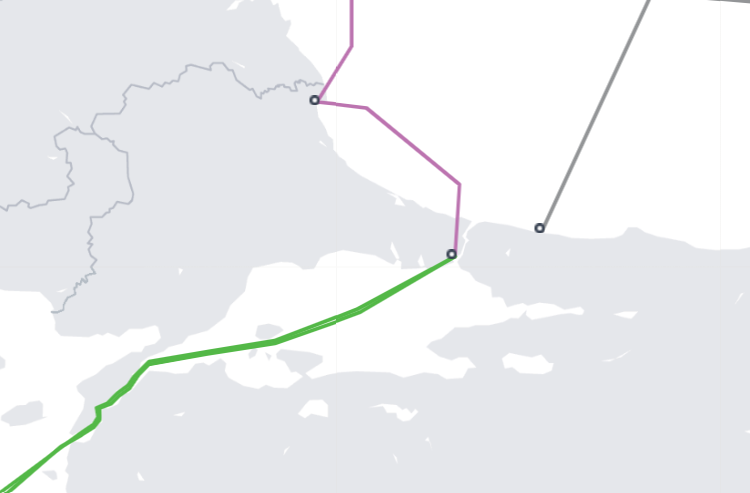
Normally, internet network is designed to handle failure. There is no single point of failure. With hundreds of cables crisscrossing the oceans, data can be automatically rerouted along a different path if one cable is cut. But we don't have hundreads of cables crossing Marmara sea!
Fortunately, Turkey isn't just dependent on the sea; terrestrial fiber backbones through Thrace provide a vital, though still vulnerable, link to the European core.
If you are reading this from the future, I hope those tensions get descalated and we are living within a peace. But for 26th of March, 2026, world seems not that peaceful. And, I read a book about the history of internet and realized again how fragile it is.
Why This Matters More Than It Used To
Governments have always controlled roads and ports to hold power. Today, they’ve realized the internet’s physical layer is just as vital. It’s called infrastructural power: the ability to quietly shape or slow information by controlling cables and landing stations rather than using obvious censorship.
While the U.S. and China battle over who builds these routes, tech giants like Google and Meta are buying their own cables to avoid being "passengers" on someone else’s geopolitical train. It’s a silent gold rush; everyone is claiming their piece of the ocean floor.
The Part Where It Gets Uncomfortable
In 2024, the "accidents" started feeling deliberate. Two Baltic Sea cables were severed by a ship dragging an anchor for 100km, while four Red Sea cables were cut near Yemen, knocking out 70% of the data traffic between Europe and Asia.
But the real weapon isn't just a physical cut—it’s the bureaucracy. In the South China Sea, repair permits that used to take ten days now take four months. When Vietnam lost all five of its cables simultaneously, it took eight months to get them back online. This isn't a glitch in the system; it’s infrastructure as leverage. A single patch of ocean can now hold global connectivity hostage.
And, here a fresh news from my time: "Iran has struch the AWS data center in UAE".
🔴 Iran has struck the AWS Amazon data center in the UAE.
— Universal News (@universalnewsx) March 2, 2026
For the first time, a global cloud infrastructure has been hit in a war. pic.twitter.com/ltfJ0HsCnv
What Happens in a Real Crisis?
Here is a question I genuinely do not know the answer to: what happens to the internet in a serious military conflict?
Not a trade war. Not economic sanctions. I mean the kind of conflict where someone decides that the easiest way to hurt an opponent is to cut their cables. Because it would work. It would work extremely well. You cannot fire back at a ship dragging an anchor. You cannot easily reroute 70% of a continent's internet traffic in an afternoon. And you only need to damage a handful of the right cables to cause enormous, cascading disruption.
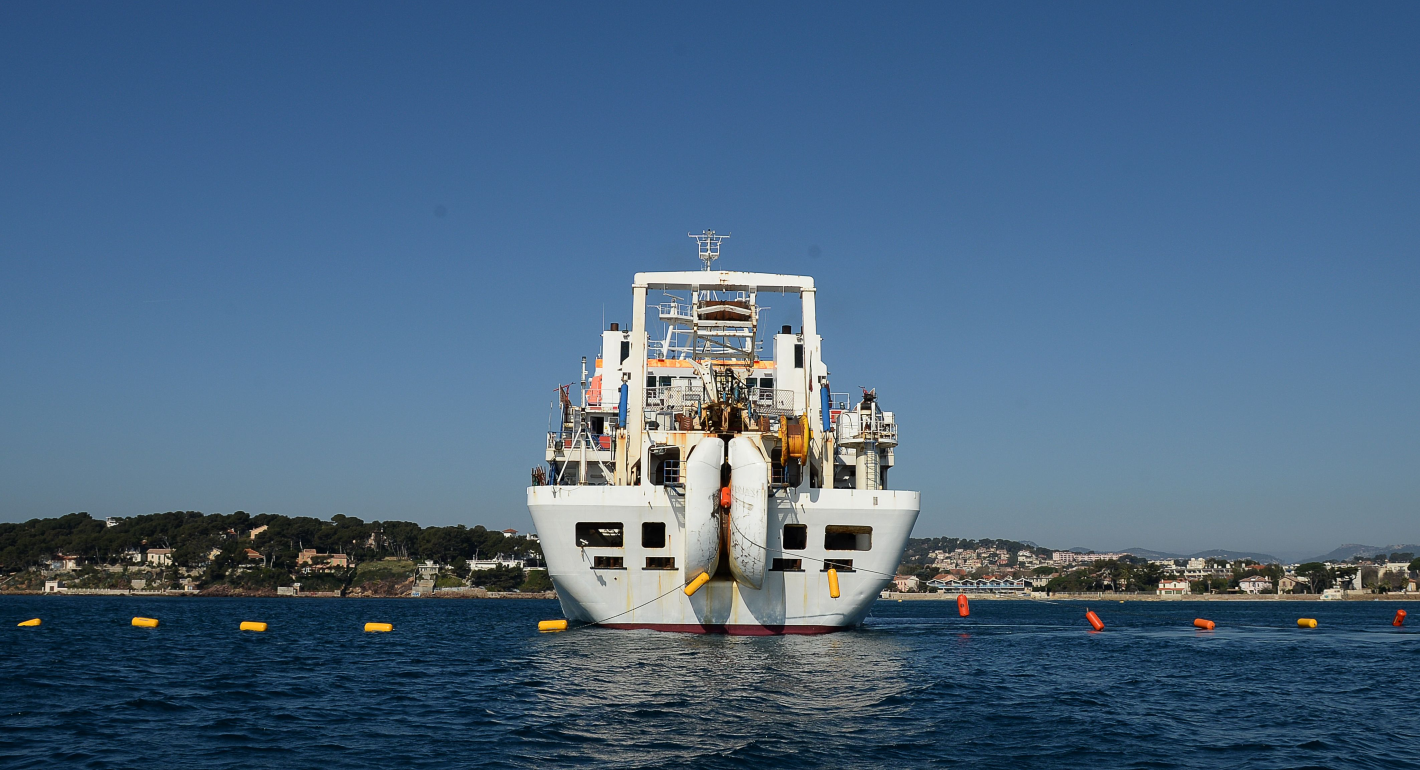
The cables are, for the most part, unguarded. There are only about 60 specialised cable repair ships in the world, total, for 1.48 million kilometres of infrastructure. At any given moment, many of those ships are already busy. The repair window for a damaged deep-sea cable is measured in weeks, sometimes months.
This is not catastrophising. This is just physics and logistics.
Governments are beginning to take this seriously. The UN launched its first advisory body on submarine cable resilience in late 2024. NATO has been quietly discussing cable protection for years. But "discussing" and "solving" are very different things, and the ocean is large.
So, What Should I Do About This?
Honestly? Probably nothing immediate. I am not suggesting you panic or stockpile ethernet cables in your basement (though, respect if you do).
But I do think there is something worth sitting with here. We have built an enormous part of modern civilisation on infrastructure that is mostly invisible, almost entirely physical, and surprisingly fragile, and then we named it something that makes it sound weightless and eternal.
The cloud does not exist. The internet is cables. Those cables are lying in the dark at the bottom of oceans that are increasingly contested. Geopolitics, which we sometimes like to imagine is a problem happening somewhere else to someone else, runs right through the seabed beneath every WhatsApp message and Netflix stream.
That seems like the kind of thing worth knowing.
References
 jessica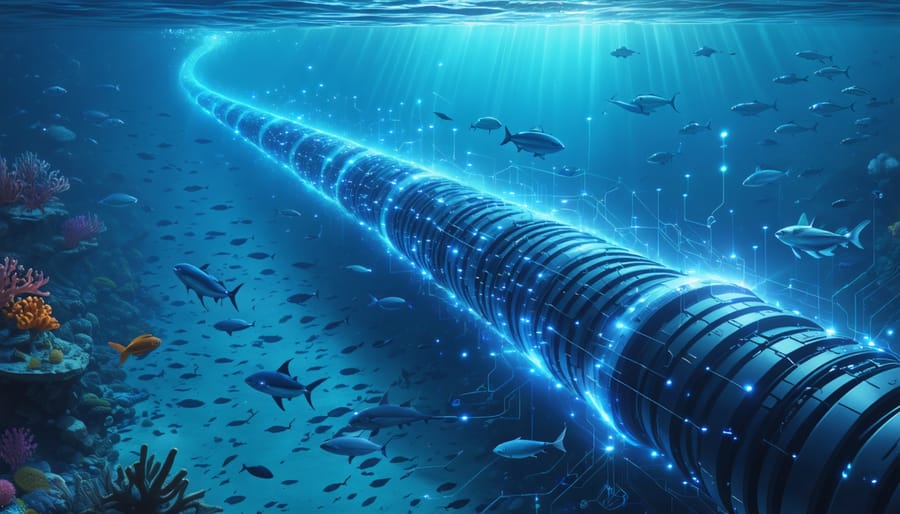
 Rishi Sunak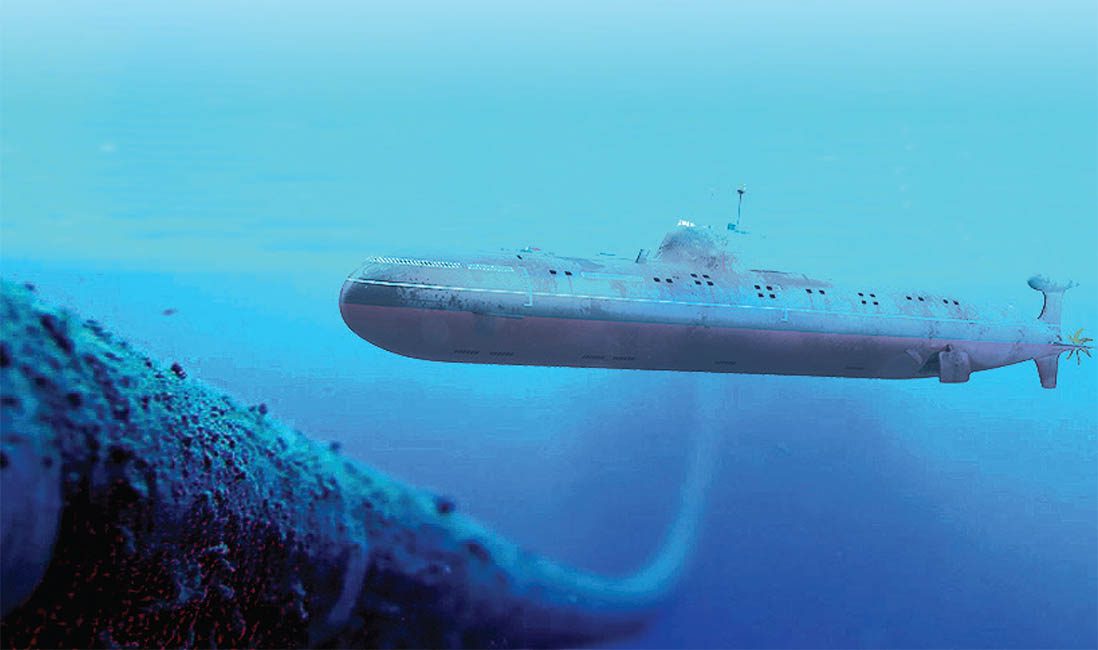



 Stratfor, Worldview org
 Contributors to Wikimedia projects